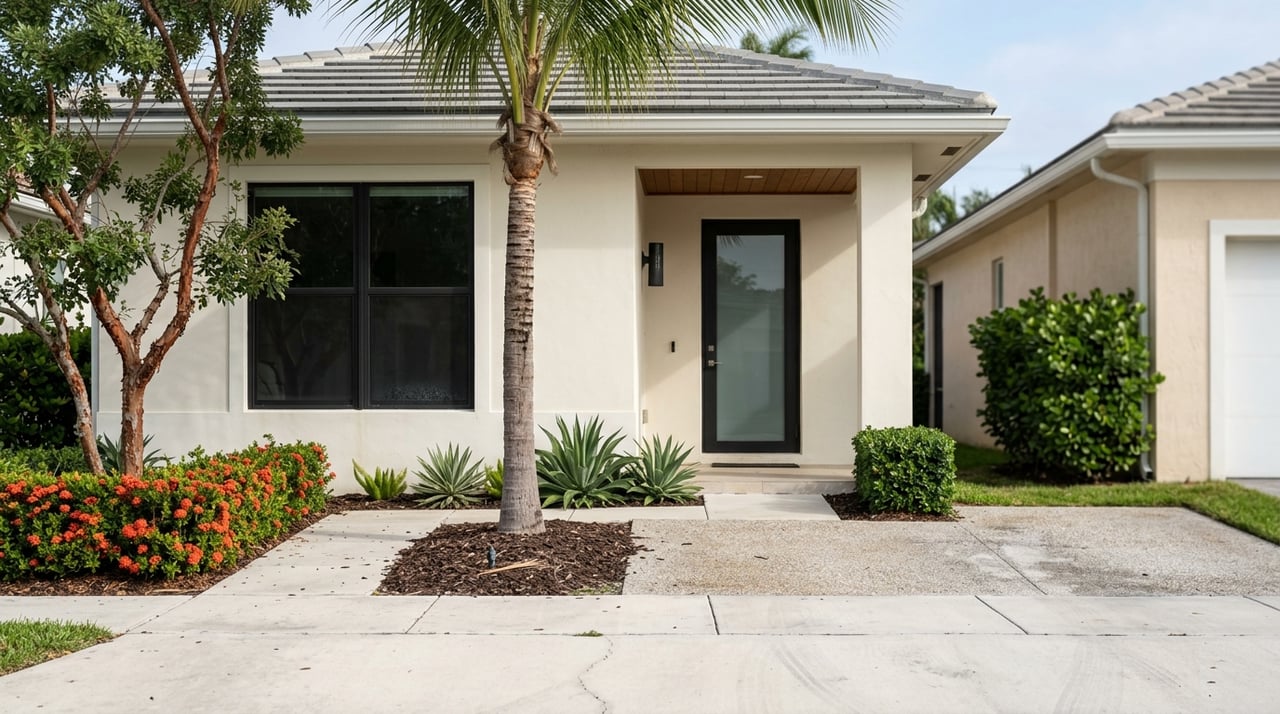
A Stuart Neighborhood Comparison Guide for Buyers
May 7, 2026
May 7, 2026
If you are trying to narrow down where to live in Stuart, you may notice something quickly: neighborhood lines are not always as simple as they look on a listing map. Some areas are defined by historic districts, some by redevelopment zones, and some by practical local search terms. The good news is that you do not need to know every label to make a smart choice. You just need to know how each part of Stuart may fit your budget, commute, and daily lifestyle. Let’s dive in.
Stuart is a compact city of about 6.25 square miles along the St. Lucie River and just west of the Indian River Lagoon. Even within that smaller footprint, the city includes a mix of historic neighborhoods near downtown, along with newer townhomes and condominiums.
That mix gives you very different home search experiences depending on where you focus. One area may offer a more walkable routine, while another may make driving access easier. In Stuart, that contrast matters a lot when you are building your shortlist.
For most buyers, Stuart is easiest to compare in three practical buckets:
These are not rigid market boundaries. Stuart’s neighborhood names can overlap with historic districts, city service areas, and redevelopment maps. What this means for you is simple: treat these as useful search areas, then confirm the exact property location with the city’s official GIS and zoning tools.
The city’s historic preservation program identifies Historic Downtown, Potsdam, Frazier Addition, Kitchings Addition, Feroe Subdivisions, and Porters Addition as historic districts. The historic survey notes that the Potsdam Plat and Feroe Subdivision form the core of downtown, while Frazier’s Addition is a primary residential neighborhood.
If you are browsing listings, you may also see nearby references that connect to the downtown core and riverfront setting. In practical terms, this is the area many buyers look at first when they want to be close to Stuart’s most active central district.
This area has Stuart’s strongest walkability. The TRAM Downtown Loop connects City Hall, the Riverwalk, the Lyric Theatre, and public parking, while city docks, Flagler Park, and downtown wayfinding support a pedestrian-friendly environment.
Downtown has also been reshaped into a more active district with shops, restaurants, entertainment, and arts venues. If you picture yourself enjoying riverfront activity and having more destinations close by, this part of Stuart may stand out.
Historic areas often come with older housing patterns and a more irregular street layout. In downtown Stuart, the street pattern is shaped by both the railroad line and the river edge, which makes the area feel distinct from more typical grid-style neighborhoods.
For buyers, that means it helps to look beyond the neighborhood name alone. Pay attention to lot size, parking setup, traffic flow, and how close a home is to the downtown core if walkability is a top priority.
East Stuart is treated by the city as a distinct neighborhood and historic area. The city describes it as the center of Stuart’s historic Black neighborhood and notes it is being considered for National Register historic district nomination.
That separate identity matters when you compare Stuart neighborhoods. East Stuart is not just an extension of downtown. It has its own context, access points, and feel.
The East Stuart Loop on the TRAM system serves neighborhoods east of downtown and provides access to parks, community centers, and the downtown district. That makes East Stuart a useful option if you want to stay connected to downtown without being in the middle of the riverfront core.
For some buyers, this can create a nice balance. You may be able to focus on residential streets while still keeping downtown destinations and community amenities within easier reach.
If your priorities include practicality and value, East Stuart is worth a close look. Stuart’s housing policies distinguish older small-lot neighborhoods and emphasize preserving existing attainable housing stock, which makes these kinds of areas a natural place to compare entry points.
That does not mean you should assume pricing. It means East Stuart may be one of the places where buyers should carefully compare current listings, lot sizes, and property condition when looking for options that align with a tighter budget.
North of the Roosevelt Bridge, the city’s expanded CRA includes property fronting U.S. 1 and State Road 707, much of the Haney Creek conservation area, and a proposed mixed-use development called Avonlea. The city also notes that revitalization continues north of the bridge.
This part of Stuart is a reasonable area to compare separately, especially if your daily routine depends more on road access than on walkability.
If you prioritize driving convenience, this area may feel more straightforward. Buyers comparing neighborhoods for commute reasons should map access to U.S. 1, State Road 707, the Roosevelt Bridge, and, if beach access matters to them, the Evans Crary Bridge.
In plain English, this is often the more road-oriented side of the Stuart search. That can be especially helpful if you expect to drive often for work, errands, or regional travel.
A commuter-friendly area may not offer the same day-to-day pedestrian feel as downtown. If you want to walk to restaurants, arts venues, or the riverfront, you may prefer the historic core.
If, on the other hand, your top priority is getting in and out of town efficiently, the north-of-bridge search area may deserve a higher place on your list. It comes down to how you actually plan to live in the home once you move in.
As you explore listings and maps, you may run into names like Bessey Creek, Frazier, Potsdam, Indian Groves/Poppleton, and Casa Terrace. City service documents group these together for neighborhood clean-up service, which can be a practical clue when matching public maps to listing descriptions.
The city’s housing element also highlights protected residential areas such as Osceola Street near Martin Memorial Hospital, the Palm Beach Road corridor, St. Lucie Crescent, and Fern Street. It also references older neighborhoods with 50-by-125-foot and smaller lots.
What this means for you is that map-based research matters. A home may be marketed with one neighborhood label, while city planning documents may frame the area a little differently.
A smart starting point is to compare older small-lot neighborhoods with condo and townhome options, then weigh them against river-adjacent or highly walkable locations. In many markets, convenience and lifestyle features can shift price expectations, and Stuart is no exception.
The key is to compare actual listings carefully instead of relying on broad assumptions. Home age, updates, lot size, and location within the neighborhood can all affect value.
Map your likely routes before you fall in love with a home. In Stuart, a few roads and bridge connections can shape how convenient a neighborhood feels during your normal week.
If you want easier driving access, focus on connections to U.S. 1, State Road 707, the Roosevelt Bridge, and the Evans Crary Bridge. If you want less car dependence, look more closely at the downtown core and TRAM-served areas.
Downtown is the strongest fit for buyers who want restaurants, arts, and riverfront activity close by. The river supports boating, paddling, and wildlife viewing, and city docks allow daytime boat access to downtown.
If you lean more toward outdoor space and nature access, you may want to compare homes with county preserves in mind. Stuart includes preserves such as Halpatiokee Preserve, Kiplinger Preserve, and River Cove Park, which provides access to the Indian River Lagoon.
The most practical approach is to start with the city’s official GIS and future land use or zoning maps, then compare those areas with current public listings. This gives you a clearer picture of development patterns and helps you verify where a home actually sits within Stuart.
That step is especially useful because Stuart’s neighborhood labels often overlap. A listing may mention downtown, a historic area, or a broader search term, but the official map helps you confirm the setting before you decide whether to visit or make an offer.
If you want to simplify your search, think of Stuart in three buckets. The walkable historic core is best for buyers who want a more active downtown lifestyle. East Stuart is worth comparing if you want a distinct residential area with access to downtown and community amenities. The north-of-bridge and US-1 corridor can make sense if driving access is a bigger priority.
The right fit depends on how you want your days to feel, not just what shows up first in a search. When you compare Stuart neighborhoods through the lens of commute, budget, and activities, your shortlist usually becomes much clearer.
If you want calm, local guidance as you compare Stuart neighborhoods and narrow down the right fit, Linda Fritts can help you build a focused, low-stress plan for your next move.


With over nine years of experience serving Martin and Saint Lucie counties, Linda Fritts combines deep local knowledge with a highly personalized approach. She is committed to guiding every client through the complexities of buying and selling homes with integrity, professionalism, and care.

Linda Fritts
3727 SE Ocean Blvd Ste 200B Stuart FL 34996