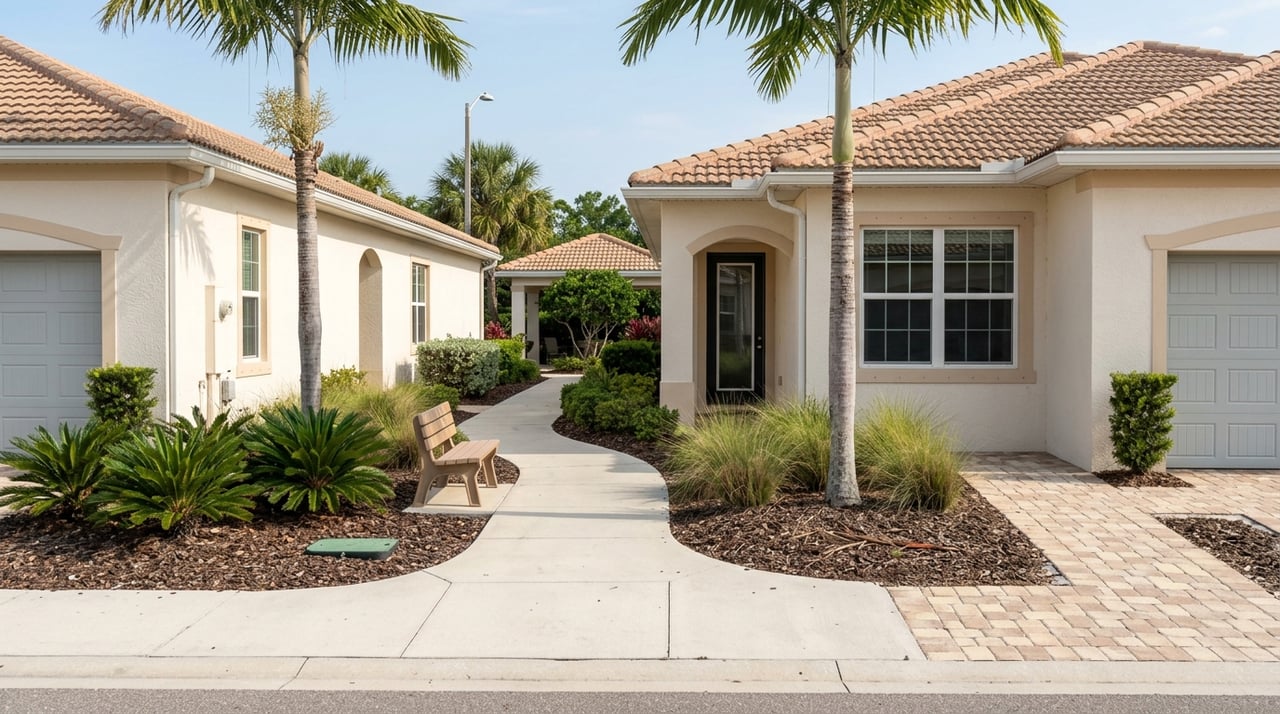
Living in Port St. Lucie: Which Planned Community Fits?
June 11, 2026
June 11, 2026
If you picture Port St. Lucie planned communities as rows of homes with a gate and a clubhouse, you may be missing what daily life actually feels like. In many of these neighborhoods, your routine can center on trails, nearby errands, social spaces, and outdoor gathering spots instead of long drives and purely private-lot living. If you are considering a move to Port St. Lucie, this guide will help you understand how these communities function day to day and what that could mean for your lifestyle. Let’s dive in.
Port St. Lucie spans about 120 square miles and includes a mix of traditional suburban neighborhoods, newer mixed-use areas, and housing near retail, dining, trails, and waterways. The city also highlights access to Interstate 95 and the Florida Turnpike, including interchanges at Tradition Parkway and Becker Road. For you, that means planned-community living in Port St. Lucie often blends neighborhood amenities with practical regional access.
This setup can feel different from older neighborhoods where most errands require a longer drive. In Port St. Lucie’s newer planned areas, the design often puts sidewalks, shared green space, and everyday convenience at the center of the experience. That changes how people spend their time at home and around the neighborhood.
A major theme across Port St. Lucie’s planned communities is shared outdoor space. Instead of life revolving only around your backyard, many neighborhoods are designed around trails, sidewalks, lakes, preserves, and gathering areas. That can make it easier to build walking, biking, or casual outdoor time into your normal routine.
The city’s broader trail network supports that lifestyle too. The Boardwalk at The Port District stretches about 4,300 feet along the St. Lucie River, and the planned Wilderness Trail in Wilderness Park is designed as a 2.1-mile concrete trail. Even if you live in a specific master-planned community, you are still part of a city that continues to invest in outdoor recreation.
In communities like Tradition, sidewalks and trails are built into the layout. Tradition describes miles of trails, more than 500 acres of lakes, and more than 300 acres of parks and nature preserves. That kind of design can make a simple evening walk, bike ride, or coffee run feel like part of neighborhood life rather than a separate outing.
Riverland follows a similar idea with more than 5 miles of greenways and over 300 acres of preserved natural habitats. It also emphasizes traffic-free pathways connecting parts of the community. If you want a neighborhood where getting around on foot or by bike feels easier, this is one of the clearest features to look for.
If you want a planned community that feels organized around a central hub, Tradition stands out. It is one of the strongest examples in western Port St. Lucie of a master-planned neighborhood built around a town-center concept. The community describes a wide range of housing styles connected by sidewalks and mature trees, which helps create a more connected feel.
Tradition Square plays a big role in daily life there. It is known as a place for recurring events, markets, and festivals, while The Landing at Tradition adds shopping and dining nearby. If you like the idea of having events, restaurants, and routine errands close to home, Tradition is one of the clearest examples in the area.
A town-center setup can make daily life feel more convenient and social. Instead of planning a separate trip for every errand or activity, you may be able to combine shopping, dining, and leisure in one area. For some buyers, that creates a stronger sense of place and a more connected weekly routine.
This does not mean every home in Tradition will feel the same. Housing styles vary, and your experience will depend on where you are within the community and what kind of home you choose. Still, if you are comparing planned communities, Tradition is one of the most town-centered options in Port St. Lucie.
Riverland is presented as a 4,000-acre master-planned community with preserved natural areas, greenways, and a future town center. The scale matters because it gives the community room to include multiple parks, connected pathways, and a wide range of amenities. If you are looking for a community built with movement and recreation in mind, Riverland is a strong contender.
One of its recurring themes is connection without heavy car traffic inside the neighborhood. The community highlights traffic-free pathways and greenways that link areas together. For you, that may translate into an easier time getting outside, staying active, and using amenities as part of your normal day.
Valencia at Riverland is the active-adult portion of the larger Riverland community. It includes club villas, single-family homes, and luxury residences, along with access to programming centered on clubs, shows, trips, activities, and events. That makes it especially relevant if you are searching for a more maintenance-light home within an amenity-rich setting.
For downsizers, this model can be appealing because it combines simpler home options with a broad social calendar. Instead of giving up activity when you simplify your housing, you may actually gain easier access to it. That is one reason Riverland often comes up in conversations about lifestyle-focused moves in Port St. Lucie.
PGA Village Verano is another planned-community option where daily life often revolves around on-site amenities. The community offers homes from about 1,500 to more than 3,000 square feet, with views that may include golf, lake, or preserve settings. It is positioned as an active new-home community with resort-style features.
Club Talavera is a key part of that experience. Amenities include a social clubhouse, fitness center, indoor lap pool, resort pool, outdoor fire features, and a 27-court private pickleball complex. If your ideal routine includes fitness classes, social spaces, and recreation close to home, Verano is worth a close look.
For buyers who want lower-maintenance living, villa options can be especially attractive. Research points to PGA Village Verano’s villa choices, along with Riverland’s club villas, as two of the clearest examples in amenity-dense communities. If you are downsizing or simply want less upkeep, this is an important feature to compare when touring neighborhoods.
A maintenance-light home does not mean every responsibility disappears. It does mean your day-to-day housing setup may feel simpler than a larger home on a more traditional lot. For many buyers, that opens up more time for travel, hobbies, or just a more flexible routine.
Lifestyle matters, but convenience matters too. Many of Port St. Lucie’s planned communities are designed to keep shopping, dining, and healthcare within easier reach. That practical side of daily life is one reason these neighborhoods appeal to both relocating buyers and local movers.
In Tradition, The Landing at Tradition is described as a 600,000-square-foot shopping center with nationally known retailers. Riverland is also moving toward an all-in-one setup, with Riverland Town Center identified as a Publix-anchored shopping center at 12321 SW Community Blvd. In both cases, the goal is clear: make routine errands feel more manageable.
Healthcare access is also part of the conversation in Port St. Lucie. Cleveland Clinic Tradition Hospital is located at 10000 SW Innovation Way and operates 24/7 with emergency services. HCA Florida St. Lucie Hospital is located at 1800 SE Tiffany Ave.
For many buyers, especially those planning a long-term move or downsizing, proximity to medical care is not a small detail. It can influence peace of mind as much as lifestyle amenities do. That is one reason healthcare is consistently highlighted when people talk about planned-community living in this part of the Treasure Coast.
The right planned community depends on how you want your day to feel. Some buyers want a true town-center environment with events and shopping woven into the neighborhood. Others want a strong amenity package, a lower-maintenance home, or a community built around trails and active recreation.
Here is a simple way to think about the major differences:
| Community | Everyday feel | Standout features |
|---|---|---|
| Tradition | Town-center oriented | Trails, lakes, parks, events, nearby shopping and dining |
| Riverland | Recreation and connection | Greenways, preserved habitats, pathways, future town center |
| Valencia at Riverland | Active-adult and social | Club villas, events, clubs, trips, lower-maintenance options |
| PGA Village Verano | Resort-style convenience | Club Talavera, fitness, pools, pickleball, villa options |
What this means for you is simple: your best fit may have less to do with the home itself and more to do with the routine you want to build. When you tour planned communities, pay attention to how errands, recreation, and social spaces fit into your everyday life.
It helps to look beyond the model home. Ask yourself how often you would really use the trails, clubhouse, pools, or town-center spaces. A beautiful amenity package only adds value to your life if it matches how you like to spend your time.
You should also think about convenience in practical terms. How close are your likely grocery runs, medical appointments, and highway routes? In Port St. Lucie, many planned communities are designed to reduce friction in everyday life, but each one does it a little differently.
If you are relocating, downsizing, or searching for a lower-stress move, having a local guide can make these differences easier to sort through. The goal is not just finding a house. It is finding a community that fits the way you actually want to live.
If you want help comparing Port St. Lucie communities, narrowing down your options, or planning your next move with clear steps, Linda Fritts can help you move forward with calm, local guidance.
With over nine years of experience serving Martin and Saint Lucie counties, Linda Fritts combines deep local knowledge with a highly personalized approach. She is committed to guiding every client through the complexities of buying and selling homes with integrity, professionalism, and care.
Linda Fritts
3727 SE Ocean Blvd Ste 200B Stuart FL 34996